Ever since I discovered the pleasure of listening to audio books, I’ve thought about making audio versions of my novels. But the high cost of production and my unfamiliarity with the process kept me from moving ahead.

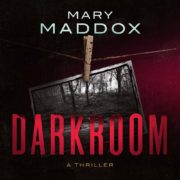
Then, in mid-May of 2017, my thriller Darkroom won First Prize for Fiction in the IndieReader Discovery Awards. This honor may seem unrelated to producing an audio book. It’s not. The award renewed my faith in Darkroom. Like most writers I believe in my work. Otherwise I would not be writing. But the validation boosted my confidence enough to justify the substantial investment in an audio book production.

IndieReader invited to me attend a BookCon event in New York City to receive the award in person. Unfortunately, medical problems kept me from making the trip. Of course, I was disappointed. It occurred to me that I could use the unspent travel money to produce an audio book of Darkroom.

Choosing a production method

I could have read Darkroom and managed the studio production work myself—the least expensive option—and probably ended up with a substandard audio book. I haven’t worked in theater since college and I know almost nothing about sound editing. Sure, I could have learned, but experience has shown me that it takes practice to become competent at new skills. I chafed at the idea of delay. Even more, I refused to make the Darkroom audio book a learning project.

Another avenue of audio book production is through exchanges like ACX and Findaway, which allow you to bid for readers and hold auditions. I felt too inexperienced to sort through a slew of auditions—some by readers who might or might not have access to adequate sound equipment—so I searched instead for an independent studio.

After casting about for a few weeks, I settled on Spoke Media, a production company with a good reputation and a contact person who returned my messages within a day or two (as opposed to a couple of weeks). After listening reader auditions, I chose Alison Pistorius, a theatrical actor whose voice evokes my main character, Kelly.

A new cover for the audio book

I needed an audio version of my cover. Unfortunately, I’d engaged the cover artist through an intermediary, and this company no longer worked with him. I asked the company for help anyway, but received no response. So, I dug up contact information for the cover artist and wrote to him directly. Again, no response. I won’t name the cover artist or the company. I will only say that my estimation of them has taken a nosedive.

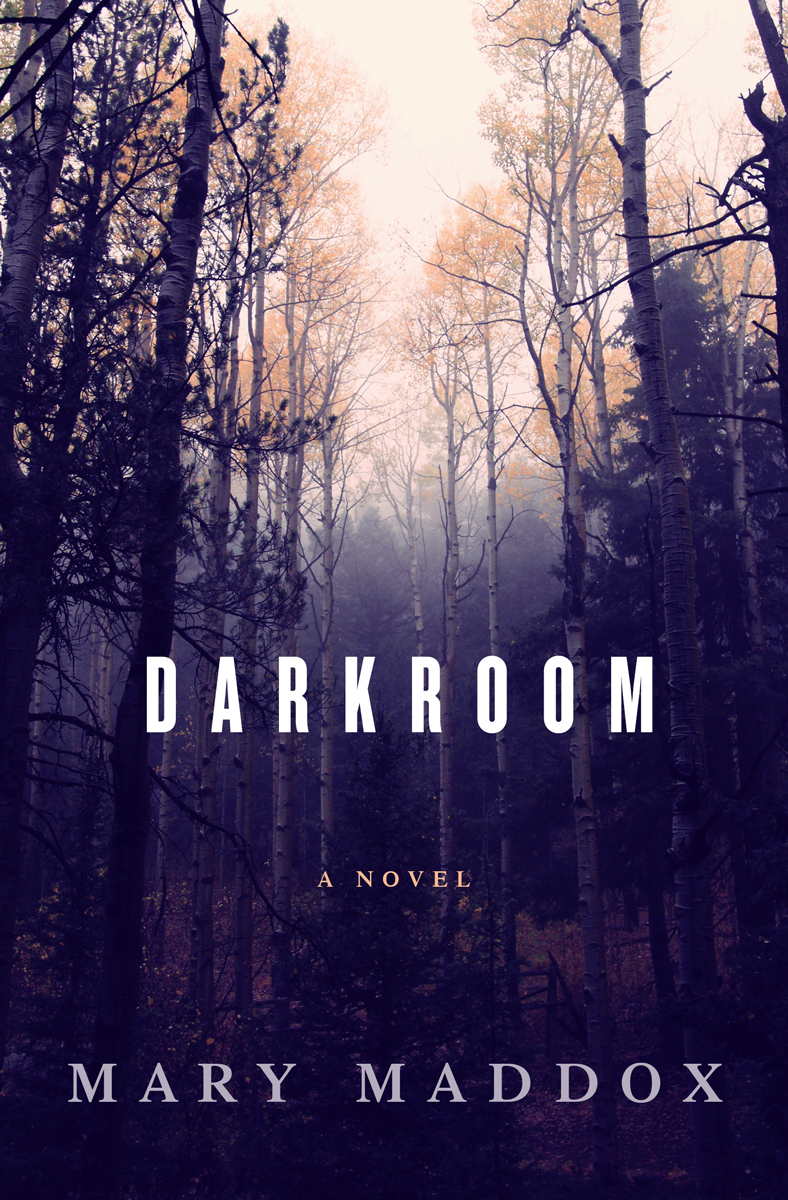
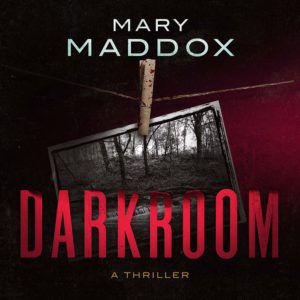
Damonza designed a compelling new cover for both the ebook and the audio book of Darkroom. Some readers say they prefer it to the earlier cover.
A few problems

Spoke Media worked fast. Maybe too fast. In three weeks, the audio files were ready for review. By and large the audio book sounded terrific. But I’m glad I listened to every file. Sentences were repeated in a few places, and worse, an entire page of Chapter 28 had not been recorded at all. Maybe you’ve encountered audio books with annoying and confusing mistakes—repetitions, obviously missing words, inconsistent chapter titles—mistakes the producer failed to catch. (And it’s the job of the producer—in this case, me—to catch them.) I’m glad Darkroom didn’t end up being that kind of audio book.

After Spoke Media completed the revisions, I set about uploading the files to my distributors, ACX and Author’s Republic. The ACX reviewer informed me that the files needed a couple of minor edits. The opening credits must be in a separate file rather than part of the Prologue file. Same thing for the closing credits, which were part of  the final chapter file. Making the changes was no big deal, but I could have avoided the brief delay if I’d known the formatting rules.

Success!

The audio edition of Darkroom finally became available in September of 2017. The sound quality is superb and Allison Pistorius does a terrific job of reading the story. I’m pleased with the final product and hope that you will be, too. You can order the Darkroom audio book from Audible, iTunes, and several other outlets.

There are kids who dream of growing up to be entrepreneurs. They set up lemonade stands at the end of 10K races. They seek out jobs stocking supermarket shelves or hawking mall fashions as soon as they’re old enough to work.

I wasn’t one of those kids. I put off getting my first job as long as possible, preferring to spend my summers reading books.

So it’s ironic that I find myself the president of a corporation.

Okay, it’s not much of a corporation. Its assets might keep a dog in kittles for a lifetime as long as the dog isn’t too large and price of kittles doesn’t skyrocket.

How did this happen?

A few years ago I decided to quit looking for another agent and publish my novel Talion on my own. A newbie to the world of publishing, I learned that a book must have something called an ISBN, a number that identifies it for cataloguing and marketing. There are several ways to obtain an ISBN free of charge, but whoever gives it to you is the publisher of record for your book.

If I was going to invest time and money to publish my novel, I wanted to be the publisher of record.

That meant becoming an official publisher. It’s easy to do. Just go to myidentifiers.com and buy a batch of ten ISBNs for a little less than $300. You’re now a publisher.

I called my publishing company Cantraip Press. Cantraip is an archaic Scottish word meaning “magic spell.” I hired a graphic artist to design a logo with a Celtic flavor and I was ready to go. (Since then I’ve redesigned the logo.)

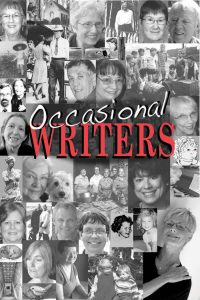
A year later, I agreed to publish Occasional Writers, an anthology by the Past~Forward Memoir Group, a group of local writers who meet twice a month to discuss each other’s work and hone their skill. Since the group is funded by our local arts council, I had to enter into a contract with a corporate entity as well as with each of the nineteen writers whose work would appear in the anthology. With advice from an attorney, I drafted the contracts myself.

It was time to separate my business obligations from my personal obligations and those of my husband. The press became an S-Corp, Cantraip Press, Ltd., which looks kind of cool on letterheads.

The process of incorporating isn’t difficult—fill out a form, pay some money to the State of Illinois, acquire a credit card for business expenses.

When the fiscal year ended, I thought vaguely about corporate taxes. Given that Cantraip Press, Ltd. had made only a few hundred dollars in profits, I doubted it would owe the government any tax. But I figured the government would expect me to submit a return, which I would prepare along our personal income tax returns.

Then at the beginning of April I got a letter from the IRS. Cantraip Press, Ltd. owed them $200, the penalty for failing to file a return by the deadline.

But, but . . . April 15 was two weeks away.

Was this some kind of sick April fool’s day joke perpetrated by the IRS?

The letter gave a phone number to call if I had questions. So I called. The lady who answered explained that corporate taxes are due on March 15. I apologized, telling her it was my first corporate tax return and I was clueless. She was kind enough not to laugh. Instead she put me on hold. A few minutes later she was back. Since I didn’t know about the March 15 deadline, she said, the IRS would waive payment of the penalty—this one time only.

Whoever said the IRS is heartless?

Every year since then, I’ve prepared my corporate tax returns, federal and state, and mailed them well before March 15. In May I mail off another form and a $100 check to renew the status of Cantraip Press, Ltd. as an official S-Corp in the State of Illinois.

But here’s the thing. I hate—just hate—keeping books and doing taxes. I have the requisite software programs, QuickBooks and TurboTax. They make the work easier, but they cannot make it interesting. For me it’s a slog. I can concentrate for hours on writing or editing or playing Scrabble, but ten minutes of bookkeeping spaces me out.

Between bringing QuickBooks up to date and doing the taxes, the last week of February was no fun. It would make sense to hire an accountant if my tiny corporation made any money. But it doesn’t.

paranormal mysteryThe press has grown, though. It has published six books altogether, two by me and the rest by other authors. This spring Cantraip will release two more books, my novel Darkroom and a two-novella volume, Vibe/Sync, the second in Letitia Moffitt’s TraceWorld series.

I’ve had to buy more ISBNs. The truth is I like publishing books, I just hate balancing them.

Last month I received several intriguing cover ideas from graphic designer Pete Garceau. Any of them would have made a great cover for Darkroom, so to help me choose, I polled readers to discover which one they liked most. Two clear favorites emerged.

Darkroom_1

This cover captures the sinister mystery of a forest in the mountains, a setting central to the story. It received 42% of the votes. I love the subtle colors in the image and way the trees form a tunnel at their center. I’ve seen similar covers on suspense novels, which isn’t altogether a bad thing. Readers generally want a cover to signal the genre of the story. Since Darkroom is psychological suspense, the cover with the mysterious forest does tell readers what they’ll get.

But ideally I want a cover that does more than its basic job.

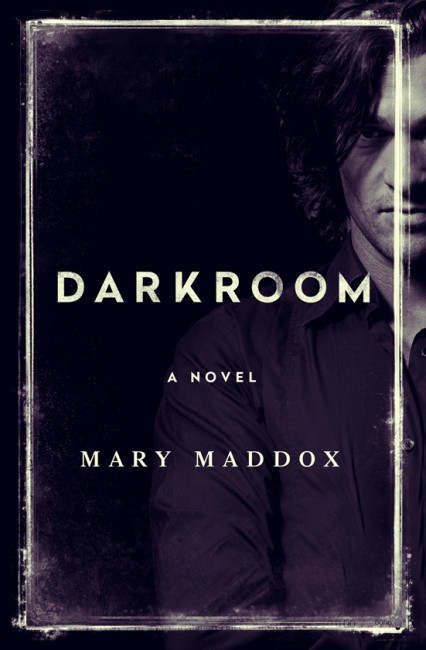
The other finalist won the poll with slightly more than half the votes, not a huge enough margin to make it an overwhelming favorite. The white frame suggests an old-fashioned darkroom negative. (The photographer in the novel still works in a darkroom even though most others have moved to the digital format.) I like the way the man in the image is only half visible and part of him is outside the frame, eluding the camera. Because he’s partially hidden (or hiding) he becomes sinister. The purplish darkness adds to the effect.

Darkroom_9a

This cover evokes the mood of Darkroom perfectly, and it’s more distinctive than the other finalist. Perfect except for one thing—the man. His appearance is wrong for the story. None of the characters looks anything like this guy. so I went back and forth between these two very good but not ideal alternatives.

Then Pete Garceau went to the extra trouble of finding just the right model for the cover. Unlike the other one he faces the viewer with an ambiguous gaze that suggests menace or defiance. He looks like a bad guy with dark motives.

And that’s just what I want.


Darkroom Cover


Thank you to everyone who helped me choose!

It’s finally here! Children of Darkness – Book One in The Seekers Series is available NOW. Check it out on Amazon.com. FREE for Kindle Unlimited subscribers. GET YOUR COPY

“A must-read page turner.” Kirkus Review

About the Book:

The Children of Darkness - CoverThe Children of Darkness

The Children of Darkness is about a society devoid of technology, the result of an overreaction to a distant past where progress had overtaken humanity and led to social collapse. The solution—an enforced return to a simpler time. But Children is also a coming of age story, a tale of three friends and their loyalty to each other as they struggle to confront a world gone awry. Each searches for the courage to fight the limits imposed by their leaders, along the way discovering their unique talents and purpose in life.

“If the whole world falls into a Dark Age, which it could plausibly do, who could bring us out of it? According to David Litwack in The Children of Darkness, the only answer is us, now, somehow reaching into the future.” – Kaben Nanlohy for On Starships And Dragonwings

Publication Date: June 22, 2015 from Evolved Publishing
Purchase Link: http://smarturl.it/Seekers1
FREE WITH KINDLE UNLIMITED
Goodreads: https://www.goodreads.com/book/show/23485495-the-children-of-darkness

Speculative Literary Fiction

Someone recently asked me why I use the term “speculative literary fiction” to describe the genre of my novels. While both terms are used frequently on their own, they are not often paired together.

Speculative fiction is a term coined by Margaret Atwood in an effort to avoid the hard-core sci-fi label (she said she needed a category that meant sci-fi without Martians). It has been used to describe a number of sub genres—space opera, techno-thrillers, dystopian, post-apocalyptic, even fantasy—basically anything that is not “real world.” The key to speculative fiction is the what-if aspect. What if the world as we know it was different in one or more ways? While this what-if, alternate history/alternate world approach can be used to explore future technology or just spin a good yarn, it also enables an author to focus on some theme by altering an aspect of the world as we know it.

Literary fiction is usually understood to mean quality writing, deeper characters and an exploration of universal themes.

So why combine the two? The primary purpose of declaring a genre is to set the expectation of the prospective reader.

Using the term speculative fiction by itself can misrepresent a book. Readers might expect Star Wars or the Zombie Apocalypse, or an emphasis on some hypothetical technology such as faster than light spaceships or time travel. Literary fiction tends to imply real world, such as The Help or The Secret Life of Bees.

Many great books have speculative premises, but are literary in nature. Atwood’s The Handmaid’s Tale is a good example, or the works of Usrula LeGuin. Even a novel like Cormac McCarthy’s The Road might fit. While it’s certainly post-apocalyptic–we find out little about the cataclysm that brought about the current state–the author dwells on the relationship between the man and the boy, and the power of love. Another example might be Never Let Me go by Kazuo Ishiguro. While the what-if of this world is the use of cloning to grow organs, it’s told from the viewpoint of the clones, and shows much more about relationships and the human condition than about technology.

I use speculative literary fiction as a term to distinguish alternate history or alternate worlds, where the emphasis is not on whiz-bang technology, aliens, space travel or the like, but more on deeper characters and universal themes, brought to the fore by the unique difference in the imagined society or world.

Get Your Copy of The Children of Darkness Now!

 About the Author:

David Front PageThe urge to write first struck when working on a newsletter at a youth encampment in the woods of northern Maine. It may have been the night when lightning flashed at sunset followed by northern lights rippling after dark. Or maybe it was the newsletter’s editor, a girl with eyes the color of the ocean. But he was inspired to write about the blurry line between reality and the fantastic.
Using two fingers and lots of white-out, he religiously typed five pages a day throughout college and well into his twenties. Then life intervened. He paused to raise two sons and pursue a career, in the process becoming a well-known entrepreneur in the software industry, founding several successful companies. When he found time again to daydream, the urge to write returned.

After publishing two award winning novels, Along the Watchtower and The Daughter of the Sea and the Sky, he’s hard at work on the dystopian trilogy, The Seekers.

David and his wife split their time between Cape Cod, Florida and anywhere else that catches their fancy. He no longer limits himself to five pages a day and is thankful every keystroke for the invention of the word processor.

Website: www.davidlitwack.com
Facebook: David Litwack – Author
Twitter: @DavidLitwack

Giveaway


a Rafflecopter giveaway

More Reviews!

“Litwack’s storytelling painted a world of both light and darkness–and the truth that would mix the two.” Fiction Fervor

The Children of Darkness is a dystopian novel that will stay with you long after you finish reading it.” C.P. Bialois

“This is a satisfying exploration of three teens’ journey into the unknown, and the struggles faced by all who seek true emancipation – both for themselves, and for the people they love.” Suzy Wilson

“Litwack’s writing is fresh, and Nathaniel, Orah and Thomas come to life in your imagination as you frantically flip (or click) the pages of this book.” Anna Tan

“…many profound themes, lovely characterizations and relationships” R. Campbell

“I was enthralled and intrigued by the authors creation of this society… David Litwack has an enjoyable and captivating writing style.” Jill Marie

“…a perfect story for young adult readers, but its underlying theme and character development will keep any adult engaged.” Kathleen Sullivan

Some time ago I redeemed the points from one of my credit cards and treated myself to a book. Not an ebook. An actual book that you can hold and touch. For sheer beauty it’s hard to beat Robert Bringhurst’s The Elements of Typographic Style. The eye glides over the creamy pages, the balanced blocks of text elegantly buttressed with marginalia. Bringhurst brings poetry to his subject. When he declares that “the heartwood [of typography] is calligraphy—the dance, on a tiny stage, of the living, speaking hand,” I get shivers.

Bringhurst writes lucidly on the history and aesthetics of typography, technical aspects such as kerning, and the mathematics underlying the design of fonts and pages. I haven’t digested the whole book. Even if I finally do, I won’t be an expert in typography. As with any art, mastery takes years of practice.

Years I don’t have.

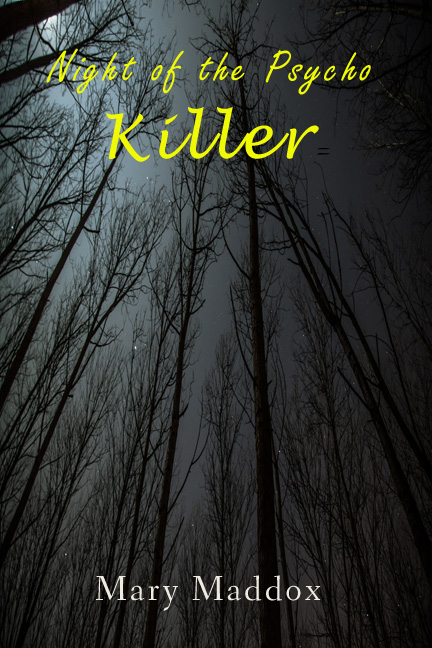
Spoof Book CoverAll the reading I’ve done about fonts stresses basic principles: Fonts communicate a message. They should reinforce the meaning of the words. They should be compatible with other fonts in the design. Take the fun book cover to your right. The fonts don’t exactly reinforce the atmosphere of menace, and the two calligraphic fonts together are a bit much.

I had some knowledge of and appreciation for fonts by the time I received four mockups of the interior of Daemon Seer, each with a distinctive page design and font combination. They were created by Morgana Galloway of the Editorial Department. The one that immediately caught my eye paired the workhorse Minion Pro for body text with Akura Popo for chapter titles and headers (or in this design footers). I love Akura. It’s bold, Gothic, and unusual, just like Daemon Seer.

Chapter Title from Daemon SeerMorgana did a fantastic job on the print and ebook editions, both of which have chapter titles in Akura  I checked out Akura online and discovered that its maker, TwicoLabs, offers it for free.

Yes, free!

It will come as no surprise to most readers that hundreds of fonts can be downloaded for free, and hundreds more purchased at a reasonable price. But when I began working with typography, it was a revelation to me. During a shopping binge at MyFonts, I found  Crypton, a sanserif font with edges so sharp they look dangerous, for a fraction of its retail price. I had no immediate use for Crypton but bought it anyway. I can’t resist a sale.

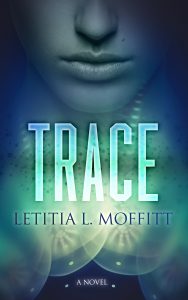
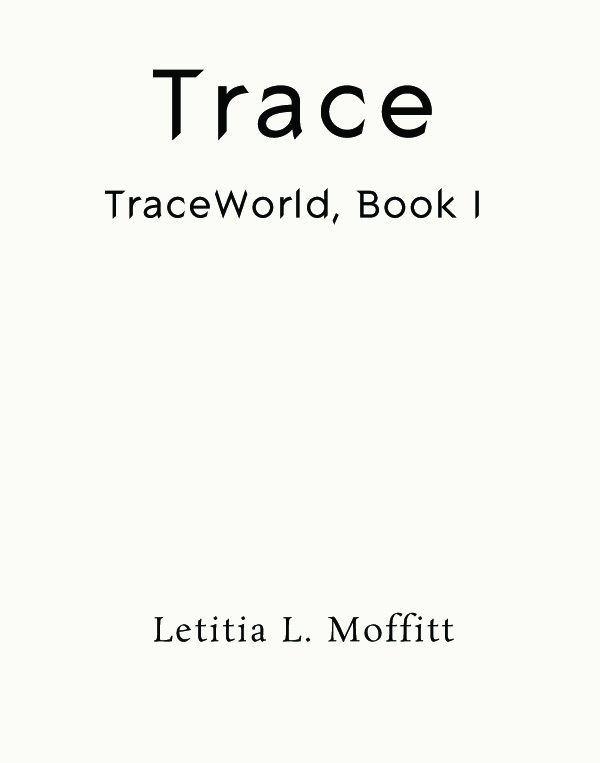
Months later, Cantraip Press, Ltd. (my corporate persona) contracted to publish Letitia L. Moffitt’s paranormal mystery, Trace. I did the interior of the print edition myself, using a purchased template, but Letitia disliked the font used in the headers and titles. “It would be fine for another novel,” she said, “but not this one.” She was right. I searched for an alternative and found . . . Crypton. It captures perfectly the edginess and razor wit of Trace.

Title Page Trace

Is that serendipity or what?

Late last year, Awesome Indies published Awesome Allshorts: Last Days, Lost Ways, the first of a series of planned anthologies. Last Days, Lost Ways contains stories by 21 authors, including Tahlia Newland, Dixiane Hallaj, Bill Kirton, Shauna Bickley — and me. I’m honored to have my story “Smilin’ Mike” published in the company of stories by so many accomplished indie authors.

“Smilin’ Mike” is one of several stories I wrote about a nine-year-old girl whose life is disrupted when her parents divorce. The girl and her mother move in with Nana, her eccentric paternal grandmother, in a quiet suburb of San Diego. (The stories are set in the 1950s, when San Diego had quiet suburbs.) Nana harbors the hope that her son will come to his senses and the family will reunite, a hope shared by the little girl but not her embittered mother. Caught up in the tension between two adults who love her, the child must negotiate a world far more complex and uncertain than the one she has known. When Nana meets one of her favorite TV personalities, Smilin’ Mike, a professional wrestler known for his humor and geniality, the girl discovers that people aren’t always what they seem and even adults can be fooled by a false image.

Last Days, Lost Ways is available as a paperback and ebook from Amazon, Barnes and Noble, and other online booksellers.


checking your grammar day and night

She’s back! Grammar Nazi is here to remind me that, no matter how hard I try, I’m doomed to be a screw-up and a loser. And the worst part is that no matter how mercilessly she harasses me, I need her.


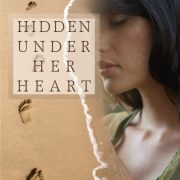
Don’t miss Rachelle Ayala’s latest book, Hidden Under her Heart (A Story of Abortion and Courage), available for a short time at the introductory price of $0.99.

About the novel

Maryanne Torres is a compassionate nurse who fails at relationships. After a string of losers, she swears off premarital sex, hoping to land a marrying type of man.

Lucas Knight, a law-school dropout, moves to California to train for the Ironman Triathlon. He’s smart, sweet, and everything Maryanne wants in a man, but their relationship suffers from his dedication to the sport. Seeking consolation in the arms of a handsome preacher’s son, Maryanne attends a church party where she is raped.

Maryanne is pregnant from the rape and plans to abort. But the identity of her rapist is hidden in her baby’s DNA. Lucas asks Maryanne to seek alternatives and pledges to support her through the pregnancy. When Lucas becomes the prime suspect, Maryanne must clear his name and make a life-changing decision.

The rapist has other ideas. In order to destroy the evidence, he offers Maryanne an illegal offshore abortion. With Maryanne’s life in danger, Lucas races to save her and her baby. However, Maryanne hides a secret that threatens to tear them apart forever.

From the author

Hidden Under Her Heart is an emotional and hard-hitting story about a young woman facing a heart-wrenching decision. We’ve heard the rhetoric, maybe even argued over the issue of abortion and rape. But behind the debates are real people—women and men with real problems and feelings. My story is not meant to be preachy, but compassionate, especially for post-abortive parents seeking closure. I think people on both sides of the fence will find meaning in the changes that both Maryanne and Lucas go through. Ultimately, it is an uplifting story, and my hope is that it will be a help to you.

About the author

I am the author of three novels: Michal’s Window, a historical romance between King David and his first wife, the princess Michal, Broken Build, a romantic suspense thriller set in a Silicon Valley startup, and Hidden Under Her Heart, a story about a nurse wrestling with her decision to abort. My stories tend to be dramatic and emotional, crossing genres and cultures. I like to dive deep and live through my characters’ eyes. Each of them are passionate but flawed women paired with conflicted men with good hearts. I hope you enjoy the emotional journey I take you on. I love to hear from readers. Please contact me on Facebook or my blog.

Recently I happened on an article in the online edition of Forbes magazine: “Publishing Is Broken, We’re Drowning in Indie Books – And That’s a Good Thing.” The author, David Vinjamuri, assesses the conflict between traditional and Indie publishing and predicts both will survive, even thrive. Vinjamuri begins by quoting two well-known authors who speak of Indies with smugness and disdain.

Brad Thor, a writer of techno-thrillers, declares that publishers “separate the wheat from the chaff” and that any “good writer with a great book . . . should be able to get a publishing contract.” I’ve never read this guy’s novels. Maybe he’s good. But I disagree that landing a contract with a big publishing house proves his or any writer’s excellence. I’ve encountered plenty of bad writing in novels issued by major presses.

Reading Tami Hoag’s Ashes to Ashes, I came upon an expository passage crudely borrowed from sources I recognized from my research into serial killers. It’s not plagiarized. Just partly digested and vomited onto the page. Okay, so Hoag was concentrating on plot and character development and left some crappy writing in the manuscript she sent off to her publisher. Where was her editor? Indie authors are exhorted to hire a professional editor lest their books seem amateurish. Let’s hope they find someone better than whoever applied the final coat of polish to Ashes to Ashes.

Maybe the editing was rushed to meet a publication schedule.

Bestselling authors are expected to write a book every year or so. Otherwise readers might abandon the brand and start reading some other author. Charlaine Harris, an author whose writing has given me delight, has been producing a Sookie Stackhouse book about every year. I’ve read all of them through Dead in the Family. Another has been published since then. Or maybe two. I’ve stopped caring. So have many fans, who find the plots lackluster and become frustrated by the lack of coherence in the story from one book to the next.

Harris’s publisher makes a lot of money from her novels. Maybe the people in charge figure her fans will buy them anyway, so there’s no longer any need for quality.

Commercial publishers are in business to make money. Nothing wrong with that. But the profit motive doesn’t necessarily foster literary excellence. Vinjamuri brings up the famous example of John Kennedy Toole’s A Confederacy of Dunces, a novel rejected because Toole refused to make changes that an editor thought would render the novel more commercial. Later, Walker Percy championed the novel. It was published and won the Pulitzer Prize. Having the right connections helps. There are elements of luck and timing in literary success.

You wouldn’t know it, though, reading Sue Grafton’s sneers about Indie authors:

“I compare self-publishing to a student managing to conquer Five Easy Pieces on the piano and then wondering if s/he’s ready to be booked into Carnegie Hall.”

Grafton pisses me off for a couple of reasons. First, she makes the broad generalization that every Indie author rushes to publish without mastering the craft of writing. Granted, much Indie writing is awful. But what is true of many (or even most) doesn’t hold for all. As in the process of commercial publication, cream rises. (So does shit, but that’s another story.)

Second, Grafton’s mystery novels aren’t “Carnegie Hall” material either. They’re the well-crafted products of a pedestrian imagination. I don’t want to offend Grafton’s many fans, but her work isn’t as wonderful as she seems to think. Sure, her books deserve to be published. They entertain many, many readers. But so do the novels of Indie authors like Morgan Hannah McDonald and Melissa Foster.

Read Vinjamuri’s article if you want evenhanded analysis of why Indie authors get dismissed while Indie filmmakers and musicians get respect, why the pricing practices of commercial publishers have created problems for them, and the ways publishing could change. As his title suggests, Vinjamuri finds reasons for optimism. It’s heartening to think there might be room for everyone.


One of my friends received a proposal recently. Not a marriage proposal, more like a plea for help thinly disguised as a business deal.

Fame Awaits

She’s an accomplished writer whose memoir was published by a prestigious academic press. She teaches writing at the university level. A stranger called and asked her to write his memoir. Someone had given him her name. An elderly fellow without much money, he couldn’t afford to pay her, but he knew Hollywood would be interested in his story. She would share the payoff when it was optioned.

I happened to be with my friend when she got the phone call. I listened to her explain that she had too much work to take on his project. She added gently that ghost writers are paid thousands of dollars to do what he was asking. The possibility of a Hollywood payoff wasn’t enough.

Why not write the story himself, she suggested. There were local writing groups that cost nothing to join. He swept the idea aside. Transportation was a problem for him, and anyway he just wanted to someone to put his story on paper. It was a tremendous story. Hollywood would snap it up.

The man kept ignoring her tactful refusals, so it took her awhile to get off the phone.

My first reaction is disdainful amusement. How could anyone be that naive? And nervy—to think an accomplished writer would spend hours and hours of hard work for the chance to share his pipe dream.

Some people.

Then empathy kicks in. Here’s a person whose story will never be told because he lacks energy and resources. I imagine him living in some ramshackle house in the country, dreaming of Hollywood. Poor and elderly and maybe sick, he has asked for help. I feel sorry for him, but not sorry enough to offer myself as his ghost writer. Time and energy are too precious. None of us knows for certain how much we have left. The older I get, the more I treasure mine.

Writers face frustration and failure all the time. They work day jobs and forgo a social life to write in the evening. They solicit agents and get perfunctory rejections or no answer at all. Once they find representation, the agent might not put much effort into placing the manuscript, especially if the first few editors show no interest. If the manuscript is accepted, the writer waits a long time for publication and receives little promotional help from the publisher. This process—from querying agents to seeing one’s book in print—takes years.

And seldom does Hollywood notice the book’s existence.

Another Forlorn Place

Writers who decide to go indie have their own set of problems. They become responsible for every aspect of publication—editing, proofreading, layout, cover design and creation, promotion and marking. Only a few writers master all of these tasks well enough to meet professional standards and only a few have the money to pay professionals to do everything. So they produce the sloppy books that give indie authors a bad reputation.

As an indie author, I’ve cheaped out and overestimated what I could do. In some ways I’m ashamed of the first edition of Talion and wish I could make every copy disappear. Instead, they remain out in the world, hard evidence of my ignorance and overconfidence. Like everyone else, I learn from my mistakes and move on.

Seeing the guy with Hollywood dreams from this angle, I’m not so sympathetic. He doesn’t want to create anything. He wants the fame and money that occasionally come from creative work. And he expects someone else to do the work, to spend time and energy on a project likely to fail.

And when it does, he has lost nothing.

I have a friend with amazing talent who is ready to stop writing. Her reasons are complex and personal — as reasons for life-changing decisions generally are — but at their heart is despair. Though she has published numerous stories, she cannot find an agent to represent her, and without an agent she has no access to commercial publishers. She has the disastrous luck of seeking publication during a seismic shift in the publishing landscape. The popularity of e-books is soaring, bookstores are closing, and independent publishers are proliferating. Agents and commercial publishers are looking for sure-fire bestsellers — nothing too quirky or original.

I understand the despair. I’ve been writing fiction a long time. Two reputable agents have taken me on, yet none of my novels found a publisher. In the end, I published one novel myself and discovered how formidable the process of promotion and distribution can be.

My friend might argue, “At least you found two agents.” But what does it say that neither of them could sell my books at a time when publication was easier than it is now? Maybe I’m horribly unlucky. Maybe I’m not quite good enough and never will be. Yet fool that I am, I keep trying because writers without readers are alone in the world. And writers do need validation. Very few can persist without encouragement from somewhere, even if it’s the memory of a high-school teacher who said, “You know, you’ve really got talent.” Most need more than that, but not all need the validation of commercial success or critical acclaim.

Photograph by Claudia Nagel

The deeper question is whether writing is necessary, whether life would be too empty and painful without it. In that case, the writer has no choice but to continue working and seeking receptive readers. Once in a while I reread parts of a little book called Art and Fear: Observations on the Perils (and Rewards) of Artmaking by David Bayles and Ted Orland. The authors examine the fears that can prevent artists from creating or doing their best work — including, of course, fear of rejection. There’s a passage I’ve gone back to more than once:

Courting approval, even that of peers, puts a dangerous amount of power in the hands of the audience. Worse yet, the audience is seldom in a position to grant (or withhold) approval on the one issue that really counts — namely, whether or not you’re making progress in your work.

I take a couple of lessons from this passage. First, doing my work, becoming the best writer I’m capable of being, is what matters most. Second, if I’m going to put power in the hands of anyone, it shouldn’t be a stranger who’s looking for something to sell. There are a few people whom I trust to tell me whether I’m making progress, whose honesty, good will, and judgment I trust. They get the power.

In the end, the artist has to decide whether to keep creating. Nobody else can force the decision. But my friend should know that others believe in her talent and hope she’ll come back to her writing.


The Amazon KindleIf you hang around Amazon’s Kindle store, you probably know that many customers are pissed about the higher prices of Kindle books. They grouse endlessly in various community forums and spit invective at Amazon, at publishers, even at writers. Now their protests have found another outlet. Furious that the Kindle edition of Michael Connelly’s latest thriller cost more than the discounted hardcover on Amazon’s Web site, readers began posting one-star reviews of the Kindle edition. They made no pretense of having read The Fifth Witness. Most conceded they love Connelly’s novels. But they felt something must be done to make Amazon and Connelly’s publisher, Little, Brown and Company, take heed.

A couple of years ago, the price of a new release on Kindle was $9.99, far less than half the cost of the hardcover. This price was set not by publishers but by Amazon. The online retailer took a smaller profit (or perhaps even a loss) in order to sell more Kindles. “Look!” Amazon told customers. “Buy a Kindle and never pay more than $9.99 for a book!” Then publishers rebelled. When Apple launched iBooks, they had another venue for their ebooks and threatened to withhold their lists from Amazon unless they determined the price. Amazon capitulated but accompanied the higher prices with the message “This price was set by the publisher.” In other words, don’t blame them for breaking the promise they made when they sold you a Kindle.

By the way, The Fifth Witness now costs $12.99 as a KIndle book, still less than half the full retail price of the hardcover and less than Amazon’s discounted price.

As a writer I have some sympathy for Connelly and other bestselling authors targeted by the protest. Not that they need my sympathy, they’re doing just fine, thank you. Still, the unfairness of those reviews must sting a little. Today I posted a brief review of The Fifth Witness on Amazon, giving it one more star than it deserved to compensate for the many undeserved low ratings.

I have less sympathy for Little, Brown and Company. Commercial publishers style themselves as “gatekeepers” who make sure only quality books are offered to readers; in fact they publish whatever they judge will sell. I once had lunch with an editor at a large publishing house who told me so, bluntly. For a long time traditional publishers have had a monopoly on book publishing, but new technologies are changing things. My dark side is gratified at seeing the arrogant, inbred, weaselly bastards scramble.

Nor do I have much sympathy for Amazon, though the company has always been courteous and fair in its dealings with me. Amazon plays hardball with publishers. They can hardly be surprised when publishers do the same.

In the end, two things determine the price of ebooks: what its costs to produce them and what readers are willing to pay.

Many people argue that ebook prices should be low because unlike hardcovers and paperbacks they cost next to nothing to produce and distribute; only a royalty to the author must be paid. This might be true if you ignore the many expenses of running a business – maintaining office space, paying editors, etc. It seems reasonable to include these expenses when determining what it costs to publish an ebook.

Blow aside their smoke about championing literary quality and nurturing writers and it’s clear publishers are in business to make a profit. Of course they charge what the market will bear. Of course they resist when retailers lower prices to undercut competition and promote sales of other merchandise. And there’s this: the longer readers expect ebooks to cost $9.99, the more difficult it becomes to raise the price. Seeing the long-term stakes, publishers fought hard to wrest control of the pricing from Amazon.

The market for ebooks has created a new economic model, and readers are a major force in shaping what it becomes. When enough readers buy ebooks instead of going to the bookstore, bookstore chains like Borders file for bankruptcy. As bookstores close, Internet retailers acquire a larger share of the market, allowing them to raise prices – up to the point where readers refuse to pay. Those customers protesting the price of The Fifth Witness on Kindle claim that bogus one-star reviews are the only way to voice their outrage. But there’s another way that’s fairer (though less emotionally satisfying). Just don’t buy the book until the price goes down.

By the way, my novel Talion can be downloaded from the Kindle store for only $2.99. (See the link below.)