
The Dangerous Darkroom tour is drawing to a close. If you hurry, there’s still time to enter the drawing for special prizes including a $25 gift card and autographed copies of Talion and Daemon Seer. Darkroom will also be on sale for $s0.99 through this coming weekend.

Meanwhile, I hope you’ll enjoy this brief excerpt from Darkroom. The story centers on assistant art curator Kelly Durrell’s search for her friend Day Randall, a talented bipolar photographer who mysteriously goes missing. This section relates how Day meets Gregory Tyson, the dangerous man who becomes her lover.

At the top of the stairs, Day stopped and listened to the voices. They boomed in the open space above the white geometric walls of the museum. The building’s shape molded the sound. A blind person could hear it and know the height of the ceiling and the steepness of its vault. Another kind of sight. But Day was all eyes. Give her scaffolding and she could shoot the maze of gallery walls, the sophisticated rats nibbling snacks and sipping chardonnay. Not her kind of shot, though. She was more the up-close-and-personal, whites-of-their-eyes, breath-to-breath type, going for that flicker of an instant before the lens fogged.

She kept standing there, breathing funny. She couldn’t be scared of those fools. Not her, the woman who’d flipped Baba and lived.

She’d felt sorry for one of his child whores and called the girl’s parents. He chased her through the house with a blade until she locked herself in the bathroom. He slammed the door, yelling that he would cut her throat, bleed her in the tub and carve her like a chicken, wrap the chunks in newspaper and toss them in a dumpster behind the supermarket with the other rotten meat. She was too scared to feel herself, like her body had turned into air. Baba had a way with threats. He might have carried them out except for Shawn, his half brother. Shawn calmed him down and told Day to get the fuck out, warning her that if she stuck her hook nose into their business again, he would personally waste her skinny ass and save Baba the trouble.

That was an occasion for terror. This was just a crowd of art snobs. No blades here. Just voices, diamond-sharp.

“Going to the party?”

Day whipped around, startled.

Stocky guy in jeans and a lumberjack shirt, not much taller than her. Dark hair streaked with gray. Life stamped in his face, deep impressions around his mouth and eyes. Irony in his smile but no trace of cruelty. He held out a gnarly hand. “Leonard Proud.”

She reached out with caution. Not that he seemed like the type who gave women crushing handshakes, but he looked strong. “Day Randall.”

His hand closed over hers—no squeeze or shake, but firm—and then let go. “Kelly says nice things about you,” he said.

“You’re her friend?”

“More like colleague. I’m on the board of the museum.”

She reached for the scuffed Pentax hanging from her neck, the first and only camera she’d owned, her longtime crutch and trusty third eye.

He waved his arm. “No.”

“It’s, like, official. Photos for the newsletter.”

“Even worse.” But he squared his shoulders and turned his face to stone. Ready for his close-up.

“Dude. I’m not a firing squad.”

Leonard clamped his mouth to keep the laughter in. His cheeks puffed a little and his eyes crinkled in amusement. She saw the moment and took the shot. Snap, snap. What she did best. Kelly would never use the photo in the newsletter—members of a board were supposed to look more dignified—but Day might add it to her portfolio if he agreed.

“Let me send you a print,” she said. “What’s your address?”

He gave her a business card, a plain one with a block font.

“You make Native American art? What kind?”

“Weaving and painting.”

“I’d like to see it.”

“There’s a couple of my pieces back there.” Leonard nodded toward the rear of the museum.

“Show me.”

“Some other time. I wanna get the meet-and-greet over with.”

Day followed him into a gallery of Inuit art. “Would you, like, do me a big favor? Point out the other board members so I’ll be sure and get shots of them. You and Joyce are the only ones I know.”

“How much is Joyce paying you?”

“She’s not.”

He snorted. “A new low, even for her.”

A glass case imprisoned several small totem animals carved from stone, including a curled-up seal so smooth and dark Day yearned to feel its coolness and weight in her hand. “It’s for Kelly. I mean, I’m not paying rent or anything, so I try to help.”

“You live with Kelly?”

“Yeah, for almost eight months. She’s in Chicago at a conference for curators, so I’m, like, helping her. It’s a surprise.”

Leonard raised his eyebrows. “You’re here without an invitation.”

“Do I need one?”

“Hell, no. You’re with me.”

Day followed him into the reception area, drafting in his wake like she sometimes drafted behind a semi in her Corolla to save fuel. She needed his forward energy to make her entry. She hated coming uninvited among these people wrapped in cashmere. Not hated—feared. You have to tell yourself the truth because these people are going to lie. Their smiles were rubbery, like masks.

Leonard veered toward the refreshments, tidbits of food on trays and glasses of wine lined up on the tablecloth beside them. Wine the color of pee after you drink way too much water. Day stopped. Too many people were crowded around the refreshments. She would catch Leonard after he got his food.

She felt something, turned, and caught Annie Laible staring from across the room. She smiled and waved and got a sour smile back. Annie had new and wilder hair, hennaed and spiked. Months ago, Day had asked permission to hang a few photographs for sale in her gallery—she needed money bad—and Annie had blown her off. Just a blunt “No” without saying why. Now it was like Annie still blamed her for asking.

Joyce was talking with two men in their forties. Older than Day, but not by much. Day was thirty-eight, though she tried hard to forget it. The short guy was wasted, face bright pink, eyes shining and empty. The other was tall and gaunt. His cheekbones drank the wind. She remembered the line from a poem she read growing up. She forgot what poem. Anyway, it described this guy. He turned his head as if he felt her stare. Their eyes met. Locked. She recognized him. Not personally. More like she was an alien species who finds another of her kind among strangers.

She lifted her camera, zoomed in, and took his picture. Then zoomed out and got the whole group. They were probably important if Joyce was talking to them.

He walked over to her. “You’re Day Randall. I bought two of your prints.”

Day knew which ones. Soon after she came to Boulder, she submitted her portfolio for an exhibit at the museum. Joyce turned down the portfolio but said she had a buyer for the prints at $350 each. A fortune for Day. Of course, Joyce never gave up the buyer’s name. She wouldn’t want Day selling to him and cutting her out of a commission. Now here he was, this guy whose cheekbones drank the wind.

“What’s your name?”

“My friends call me Gee.”

She grinned. “Am I your friend?”

“I don’t know. Are you?”

“I feel like we’re the only ones from another planet.”

Gee reached out and stroked her cheek. His fingertips set off a tingling that reached down to her core. “Let’s play Find the Magic.”

“What’s that?”

“This exhibit is called Magic and Realism.” He pointed to a painting. “What’s magical?”

The painting showed a bird and a cat, the tension between prey and predator. The bird’s beak was open in frozen song. The iridescent feathers, intense cobalt and silky green, burned into her mind. “It’s like a window into someone’s dream.”

“We’re doing analysis,” Gee said. “Notice how the details aren’t realistic. The color of the feathers, the way they glow. Not like any finch in the real world. And the proportions are skewed. The finch is ten times bigger than the cat. It fills the whole room.”

“But it’s afraid of the cat anyway.”

“How do you know?”

“I just do.”

“Maybe because the finch is hunched and the cat’s kind of batting at it. Check out these claws. The tips are red.”

“Yeah, like with blood.”

“Exactly.”

Day shook her head. “I don’t have to take things apart. I see them whole.”

“There’s nothing whole. Everything is pieces.” Gee’s gaze played over her face and started her tingling just like his fingertips had. “The universe blew up a long time ago.”
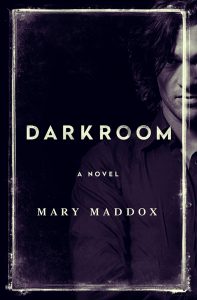
Darkroom by Mary Maddox

Looking for something different?

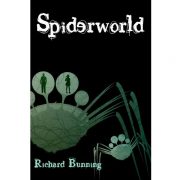
AIA Publishing has just released its fifth book, and in line with previous fiction titles, the book has a unique voice and a metaphysical bent. Spiderworld by Richard Bunning turns the tables on humans and spiders, and makes you think about humankind’s relationship with animals and with each other.

Not even the time-lord, Orlando Oversight, knows everything. But speculation can turn into a real future, and the Lush Star system, where spider-like beings treat humans as we do animals, isn’t such a distant dream away.

Do Jack Baker, the self-styled ‘Spartacus’, and his followers have a future as more than meat and slaves? Will Athalie have the life she hopes for with her hero? And will the ‘spider’ Boklung hold his business together while funding and organising the Arcraft’s voyage across the Milky Way?

Spiderworld is another of Richard Bunning’s quirky, speculative, science fictions.

Is it any good?

Of course it is. It’s published by AIA Publishing, a selective publisher with high standards in quality control. It’s also Awesome Indies Approved and has been nominated for an Awesome Indies Seal of Excellence in fiction.

Will I like it?

Here’s what the Awesome Indies review says:

This is a unique read in so many ways, and I loved it. Eight-limbed “spiders” rule the Multiverse. Humans (yeng) are an enslaved species, and also provide delicious meat to the Aranians. This was a book that pulled me into its pages. If you love sci-fi, alien worlds, even a bit of romance, then you’re bound to love this book.

Where can I buy it?

Your local Kindle Store

Smashwords.

Who is Richard?

Richard is a citizen of the United Kingdom and New Zealand, but currently resides in Switzerland. He has seven substantive books published, plus one gift-market book written with few words and many short stories appearing in a number of anthologies. His novels are all speculative science fiction while his short pieces cover many genres. He’s also written ‘modern’ English language versions of French neoclassical plays that spouted from some quite different region of his author personality.

Details on all Richard’s writing, including free stories and ‘bloggins’, plus his reviews of many other writers’ works, can be found at:- http://richardbunningbooksandreviews.com

02-SpiderworldWeb


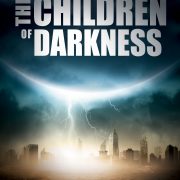
It’s finally here! Children of Darkness – Book One in The Seekers Series is available NOW. Check it out on Amazon.com. FREE for Kindle Unlimited subscribers. GET YOUR COPY

“A must-read page turner.” Kirkus Review

About the Book:

The Children of Darkness - CoverThe Children of Darkness

The Children of Darkness is about a society devoid of technology, the result of an overreaction to a distant past where progress had overtaken humanity and led to social collapse. The solution—an enforced return to a simpler time. But Children is also a coming of age story, a tale of three friends and their loyalty to each other as they struggle to confront a world gone awry. Each searches for the courage to fight the limits imposed by their leaders, along the way discovering their unique talents and purpose in life.

“If the whole world falls into a Dark Age, which it could plausibly do, who could bring us out of it? According to David Litwack in The Children of Darkness, the only answer is us, now, somehow reaching into the future.” – Kaben Nanlohy for On Starships And Dragonwings

Publication Date: June 22, 2015 from Evolved Publishing
Purchase Link: http://smarturl.it/Seekers1
FREE WITH KINDLE UNLIMITED
Goodreads: https://www.goodreads.com/book/show/23485495-the-children-of-darkness

Speculative Literary Fiction

Someone recently asked me why I use the term “speculative literary fiction” to describe the genre of my novels. While both terms are used frequently on their own, they are not often paired together.

Speculative fiction is a term coined by Margaret Atwood in an effort to avoid the hard-core sci-fi label (she said she needed a category that meant sci-fi without Martians). It has been used to describe a number of sub genres—space opera, techno-thrillers, dystopian, post-apocalyptic, even fantasy—basically anything that is not “real world.” The key to speculative fiction is the what-if aspect. What if the world as we know it was different in one or more ways? While this what-if, alternate history/alternate world approach can be used to explore future technology or just spin a good yarn, it also enables an author to focus on some theme by altering an aspect of the world as we know it.

Literary fiction is usually understood to mean quality writing, deeper characters and an exploration of universal themes.

So why combine the two? The primary purpose of declaring a genre is to set the expectation of the prospective reader.

Using the term speculative fiction by itself can misrepresent a book. Readers might expect Star Wars or the Zombie Apocalypse, or an emphasis on some hypothetical technology such as faster than light spaceships or time travel. Literary fiction tends to imply real world, such as The Help or The Secret Life of Bees.

Many great books have speculative premises, but are literary in nature. Atwood’s The Handmaid’s Tale is a good example, or the works of Usrula LeGuin. Even a novel like Cormac McCarthy’s The Road might fit. While it’s certainly post-apocalyptic–we find out little about the cataclysm that brought about the current state–the author dwells on the relationship between the man and the boy, and the power of love. Another example might be Never Let Me go by Kazuo Ishiguro. While the what-if of this world is the use of cloning to grow organs, it’s told from the viewpoint of the clones, and shows much more about relationships and the human condition than about technology.

I use speculative literary fiction as a term to distinguish alternate history or alternate worlds, where the emphasis is not on whiz-bang technology, aliens, space travel or the like, but more on deeper characters and universal themes, brought to the fore by the unique difference in the imagined society or world.

Get Your Copy of The Children of Darkness Now!

 About the Author:

David Front PageThe urge to write first struck when working on a newsletter at a youth encampment in the woods of northern Maine. It may have been the night when lightning flashed at sunset followed by northern lights rippling after dark. Or maybe it was the newsletter’s editor, a girl with eyes the color of the ocean. But he was inspired to write about the blurry line between reality and the fantastic.


Using two fingers and lots of white-out, he religiously typed five pages a day throughout college and well into his twenties. Then life intervened. He paused to raise two sons and pursue a career, in the process becoming a well-known entrepreneur in the software industry, founding several successful companies. When he found time again to daydream, the urge to write returned.

After publishing two award winning novels, Along the Watchtower and The Daughter of the Sea and the Sky, he’s hard at work on the dystopian trilogy, The Seekers.

David and his wife split their time between Cape Cod, Florida and anywhere else that catches their fancy. He no longer limits himself to five pages a day and is thankful every keystroke for the invention of the word processor.

Website: www.davidlitwack.com
Facebook: David Litwack – Author
Twitter: @DavidLitwack

Giveaway


a Rafflecopter giveaway

More Reviews!

“Litwack’s storytelling painted a world of both light and darkness–and the truth that would mix the two.” Fiction Fervor

The Children of Darkness is a dystopian novel that will stay with you long after you finish reading it.” C.P. Bialois

“This is a satisfying exploration of three teens’ journey into the unknown, and the struggles faced by all who seek true emancipation – both for themselves, and for the people they love.” Suzy Wilson

“Litwack’s writing is fresh, and Nathaniel, Orah and Thomas come to life in your imagination as you frantically flip (or click) the pages of this book.” Anna Tan

“…many profound themes, lovely characterizations and relationships” R. Campbell

“I was enthralled and intrigued by the authors creation of this society… David Litwack has an enjoyable and captivating writing style.” Jill Marie

“…a perfect story for young adult readers, but its underlying theme and character development will keep any adult engaged.” Kathleen Sullivan

Discover Authors

A warm welcome to today’s Discovery tour guest, Pavarti K. Tyler.

This week, my erotic romance Sugar & Salt released and I’ve been having oodles of fun posting reviews and talking about erotica with readers.  But in the mix, I don’t want to forget the Literary Fiction novel that came out in July.  Not that long ago in the scheme of publishing.

White Chalk, is a very personal story for me.  While it’s not autobiographical and I am not Chelle, I could have been.  So could you.  So could the kid sitting on the bus next to you on your way to work tomorrow morning.  The thing is, we never know what someone’s like is like behind the walls of their mind.  It takes very little to change the trajectory of a life.  A teacher who takes a special interest in a troubled child can save them, point them in a new direction, or take advantage and shatter their understanding of love.

About the book:

WCFinalCover-200x300Chelle isn’t a typical 13-year-old girl—she doesn’t laugh with friends, play sports, or hang out at the mall after school. Instead, she navigates a world well beyond her years.

Life in Dawson, ND spins on as she grasps at people, pleading for someone to save her—to return her to the simple childhood of unicorns on her bedroom wall and stories on her father’s knee.

When Troy Christiansen walks into her life, Chelle is desperate to believe his arrival will be her salvation. So much so, she forgets to save herself. After experiencing a tragedy at school, her world begins to crack, causing a deeper scar in her already fragile psyche.

Follow Chelle’s twisted tale of modern adolescence, as she travels down the rabbit hole into a reality none of us wants to admit actually exists.

Rachel Thompson, Award-Winning Author of Broken Pieces

Tyler combines shades of ‘Lolita’ and ‘Catcher in the Rye’ in a completely new way, drawing you in with poignant characterizations. ‘White Chalk’ goes deep into teenage angst with understanding and clarity. Savor, share, and use this poignant book as a primer on the brutal effects of abuse, neglect, and self-esteem.